

You know that moment when you stand up after a long call and your lower back sends a small, sharp complaint up your spine? That little signal is doing you a favor. It's telling you something specific about how you've been sitting. And most of the advice floating around about ergonomics — raise your monitor, buy a lumbar cushion — misses the actual point.
Here's what I've learned from years of working at a desk and paying for my mistakes: the best ergonomic habits to avoid back pain at desk work are rarely about equipment. They're about rhythm, small adjustments, and understanding why your body rebels in the first place. Let me show you what actually helps.
Key Takeaways
- Static posture, even "perfect" posture, is the real enemy — your spine needs movement every 30 minutes or so.
- The worst sitting position for lower back pain is the slouched, hips-forward slump that compresses your discs.
- Set your chair so hips and knees sit at roughly 90–100 degrees, with feet flat and screen at eye height.
- Build a 2-minute movement habit every 45 minutes rather than relying on a single "correct" position.
- Strength in your deep core and hip muscles matters more than any chair you can buy.
Why "perfect posture" is a trap
Sit up straight. Shoulders back. Chin tucked. Sound familiar? It's the advice we've all absorbed, and it's only half right. Holding a rigid, upright posture for hours is its own kind of strain — your muscles fatigue, your shoulders creep up, and you end up fighting your own body.
The uncomfortable truth is that no single sitting position is good for you if you stay in it too long. Your spinal discs rely on movement to stay nourished; they don't have their own blood supply in the way muscles do, so they absorb nutrients through mechanical loading and unloading. Sit still and that process stalls. The result? Stiffness, then aching, then the familiar low-back throb.
What really strains your back
When you slouch, your pelvis rolls backward, your lumbar curve flattens, and the load shifts onto the ligaments and the back edges of your discs. Do that for a couple of hours a day, week after week, and those structures start to complain. What makes it worse is that the damage is quiet — you don't feel it while you're doing it. You feel it later, when you stand.
- Slouching flattens the natural lumbar curve and loads the ligaments.
- Perching on the edge of the seat removes support and forces your back to work overtime.
- Crossing one leg over the other for hours tilts your pelvis and creates asymmetric strain.
- Sitting with your feet dangling or twisted sideways
Real talk: the goal isn't to find the one magical position. It's to keep changing position — and to make your "default" a supportive one so that the moments you do drift don't cost you.
Set up your desk in ten minutes (and verify it with two checks)
Equipment won't fix bad habits, but a badly set-up desk will sabotage good ones. Here's the setup order I use, and how to confirm each step so you're not guessing.
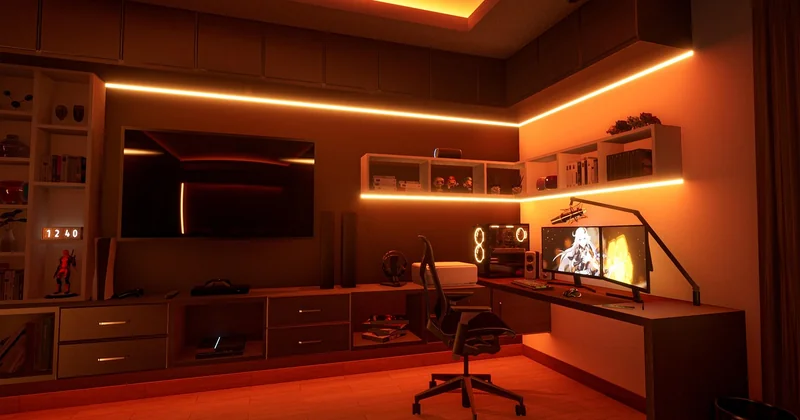
Chair first, then desk, then screen
- Chair height: adjust so your hips and knees sit at roughly 90–100 degrees, feet flat on the floor. If your feet can't reach, use a footrest — a stacked book works fine.
- Lumbar support: the curve of the backrest should meet the small of your back, not your mid-back. If your chair doesn't reach, a rolled towel behind your waist is enough.
- Desk height: your elbows should sit near 90 degrees with shoulders relaxed, forearms roughly parallel to the floor.
- Screen distance and height: the top third of the screen should sit at about eye level, and the monitor roughly an arm's length away.
- Keyboard and mouse: close enough that you're not reaching forward; wrists straight, not bent up.
Two checks that catch what your eyes miss
Photos are the fastest reality check. Have someone (or a phone on a timer) snap you from the side while you work normally — not while you're posing. You'll usually spot a forward head, rounded shoulders, or a slumped pelvis within seconds. I'll admit the first time I did this, I was convinced my setup was fine. The photo said otherwise: my screen was about 8 cm too low and I'd been craning my neck down all day.
The second check is a tape measure. Note your chair height, desk height, and screen height once, then keep those numbers. It sounds fussy, but it means when a colleague borrows your chair or you move desks, you can reset in a minute instead of drifting back into a cramped position.
| Body part | Target position | Quick fix if it's off |
|---|---|---|
| Feet | Flat, thighs roughly level | Footrest or lower the chair |
| Hips/knees | 90–100 degrees | Adjust seat height |
| Lower back | Supported at the lumbar curve | Rolled towel or lumbar cushion |
| Elbows | Near 90 degrees | Raise/lower desk or chair |
| Screen | Top at eye level, arm's length | Monitor stand or books |
The real ergonomic habit: move every 30 minutes
If you take one thing from this, take this: the best posture is your next posture. Your body handles a slouch far better than it handles four unbroken hours of stillness, no matter how upright you sit.

Here's a rhythm that works for me. Every 30 minutes I stand up — even just to refill water or look out a window. Every 45 minutes I do a short 2-minute movement break: a few gentle standing back extensions (hands on hips, lean back slightly), a slow shoulder roll, and a couple of chin tucks. It sounds tiny. It adds up to roughly 15–20 minutes of movement across a workday, and it's the single change that made the biggest difference to my afternoon back ache.
How do I relieve upper back pain from sitting at my desk?
Upper back pain from desk work usually traces back to a forward head and rounded shoulders — your head drifts toward the screen, and the muscles between your shoulder blades work hard to hold it there. The fix has two parts. First, raise your screen so you're not craning down. Second, do a few chin tucks and pull your shoulder blades gently back and down for 5–10 seconds, several times a day. Gentle movement and a corrected screen height beat aggressive stretching every time.
What is the worst sitting position for lower back pain?
The worst offender is the deep slump with your pelvis rolled back and your lower back curved outward — often paired with sitting on the very back of the seat with no support. In that position the lumbar curve flattens and the discs at the lower spine take the load unevenly. If you catch yourself there, don't jerk upright into a stiff pose; instead scoot your hips back against the backrest, let the lumbar support do its job, and stand up within the next few minutes.
What is the best floor sitting position if I work low?
Some people work from a floor cushion or a low stool, and the same principles apply: keep your pelvis slightly forward of vertical so the lumbar curve is preserved, and don't sit cross-legged in one fixed shape for hours. Switch sides, and change position often. There's no universally best floor position — the honest answer is that any position held too long is the problem.
The middle back pain nobody talks about
Middle back pain from sitting often gets lumped in with the upper and lower versions, but it has a slightly different cause: it tends to come from sustained flexion — hours of rounded, hunched sitting where the mid-spine stays bent. The muscles around your shoulder blades and mid-back get overworked trying to stabilize you.
What helps is breaking that sustained bend. A short, gentle extension over the back of your chair (hands behind your head, lean back slightly, hold for a few seconds) can ease the stiffness. But don't overdo it — if a movement produces sharp pain or pain that shoots down a leg, stop and check with a clinician.
Honestly, I wasted time early on chasing fancy stretches when the simpler answer was staring at me: I was sitting hunched for way too long without a single break. Once I fixed the rhythm, the middle-back ache faded within about two weeks.
What a chair can't do for you
You can buy the most expensive ergonomic chair on the market and still get back pain if your muscles are too weak to support your spine. This is the part most desk-setup guides skip. Your deep core, glutes, and hip muscles do much of the work of holding a comfortable posture — and sitting all day lets them go quiet.
You don't need a gym. A few minutes of bodyweight work a few times a week goes a long way:
- Glute bridges — lie on your back, lift your hips, hold for a couple of seconds, repeat. Excellent for waking up sleepy glutes.
- Bird-dogs — on hands and knees, extend the opposite arm and leg, keep your spine steady.
- Dead bugs — a gentle core drill that trains stability without straining your back.
- Standing hip flexor stretch — counters the tightness that comes from sitting.
I'll be blunt: when I first added a five-minute daily routine, I expected nothing. Three weeks in, my lower back felt noticeably steadier during long sitting sessions — not because I'd found a magic exercise, but because the muscles around my spine were finally doing their share.
A typical day that protects your back
Here's a realistic rhythm you can adapt. It's not a rigid schedule — think of it as a shape for your day.
- Morning: start with a minute of movement before you sit — a few hip stretches and shoulder rolls.
- First work block: stand every 30 minutes, even briefly.
- Mid-morning: a 2-minute movement break — back extensions, chin tucks, a short walk.
- Lunch: get up and walk for at least 10 minutes if you can.
- Afternoon: repeat the 30-minute stand and 2-minute break rhythm.
- End of day: a few gentle stretches before you log off, so you don't carry the stiffness home.
One caveat worth repeating: if your back pain is severe, constant, or comes with numbness, weakness, or pain down a leg, that's a conversation for a clinician — not something a chair or a stretch routine should be expected to solve. The habits above are for the everyday, manageable kind of desk ache that builds up slowly.
So what's the one habit I'd keep if I could only keep one? Movement. Not the perfect chair, not the lumbar cushion, not the screen calibration — though those help. It's the willingness to get up, change position, and let your spine move. That's the habit that actually keeps your back happy over the long haul, and it costs you almost nothing but a little attention.


