

It's 6:40 PM. You closed your laptop four minutes ago, and the fridge is staring back at you with a half-empty carton of eggs and a bag of spinach that has maybe one day left. Ordering in would cost you $28 and 40 minutes of waiting. Cooking feels like a second shift. This is the exact moment most weeknight dinner advice fails, because it assumes you have the energy of someone who hasn't just spent nine hours in meetings.
I don't. And I suspect you don't either. What follows is a set of easy weeknight dinner recipes for busy professionals built around one principle: the recipe has to survive contact with a real Tuesday, not a Pinterest board.
Key Takeaways
- Most "30-minute" recipes quietly assume 15 minutes of prep you didn't budget for. Real weeknight cooking means counting the whole clock.
- A small repertoire of six to eight meals beats a folder of forty you never open.
- Batch cooking two proteins on Sunday cuts the average weeknight cooking time roughly in half.
- Sheet-pan and one-pot methods win because cleanup, not cooking, is what actually drains you.
- Cooking at home for two people typically lands around $4–7 per portion versus $15–25 for delivery, depending on your city.
- The best recipe is the one you'll repeat without thinking. Novelty is a weekend luxury.
Why most easy weeknight dinner recipes fail busy professionals
Here's the thing: the recipe isn't usually the problem. The problem is the decision. By the time you're hungry and tired, choosing between forty saved recipes is a cognitive tax you can't afford to pay.
I learned this the hard way. A few years ago I built a spreadsheet with 52 recipes, one for each week of the year, all rated under 30 minutes. I cooked maybe eleven of them. The rest sat there while I ordered pad thai and felt vaguely guilty about it. The spreadsheet was impressive. It was also useless.
The hidden prep-time problem
Recipes lie about time. A "20-minute stir-fry" usually means 20 minutes after you've washed, chopped, and portioned everything. Add the grocery run, the dishwashing, and the mental load of remembering you have a shallot going soft in the drawer, and your real investment is closer to an hour.
What actually works is a stricter filter:
- Total active time under 25 minutes — chopping included, not just the pan
- Five ingredients you'll actually keep in the house
- One pan, or at most two
- Reheatable, because leftovers are the whole strategy
The catch? Most food blogs optimize for search traffic, not for your schedule. A recipe with beautiful photos and a 900-word backstory is rarely the one you'll cook at 7 PM on a Wednesday.
Six easy weeknight dinners that actually work
Below are the recipes that survived my own filtering. I'm not going to give you gram-level precision here, because that's not how you cook on a weeknight. These are frameworks you'll internalize within a month.

Sheet-pan chicken thighs and whatever vegetables
Bone-in, skin-on chicken thighs, seasoned with salt, paprika, and a squeeze of lemon, go onto a sheet pan at 425°F (220°C). Surround them with halved potatoes and whatever vegetable is closest to dying in your fridge — broccoli, zucchini, red onion. Roast for 35 minutes while you shower or answer one last email. You handle it once at the start and once at the end.
I make this two or three times a month, and the reason isn't the taste (though it's good). It's that there is nothing to monitor. No stirring, no checking, no timing anxiety.
One-pot pasta with tomatoes and greens
Put dry pasta, halved cherry tomatoes, a few cloves of sliced garlic, olive oil, and enough water to cover into a single pot. Boil. Stir occasionally. The pasta cooks in its own starchy sauce, and you throw in spinach or arugula in the last two minutes. Finish with salt, pepper, and a fistful of parmesan. Twenty minutes, one pot, no colander.
Egg fried rice for two
Cold leftover rice is the only requirement worth remembering. Hot rice turns gummy. Scramble two eggs in a hot pan, remove them, then fry rice with soy sauce, frozen peas, and scallions for three to four minutes. Fold the eggs back in. If you don't have rice, this is the meal that makes you wish you did.
Lentil and sausage skillet
Brown sliced sausage in a pan, add canned lentils (drained), a can of crushed tomatoes, smoked paprika, and a handful of kale. Simmer for about ten minutes. This one reheats better than almost anything else in this list, which makes it a Monday-night double batch.
Sheet-pan salmon with asparagus
Twelve minutes. Salmon fillets on a lined pan, asparagus tossed in oil beside them, salt and pepper. Roast at 400°F (200°C). If you're worried about fish smelling up the apartment, this method doesn't do that. I was skeptical for years and I was wrong.
Chickpea shakshuka
Sauté onion and garlic, add canned tomatoes and chickpeas, cumin and chili flakes, simmer ten minutes, then crack eggs into pockets and cover the pan until the whites set. Bread for dipping. It looks like something you'd pay $16 for at brunch and takes about as long as boiling water for a very slow pot of water.
The weekend prep that cuts your cooking time in half
I'll be direct: batch cooking whole meals never worked for me. By Thursday, the chicken-and-rice container tastes like regret. What did work — and I've done this now for years — is prepping components, not meals.
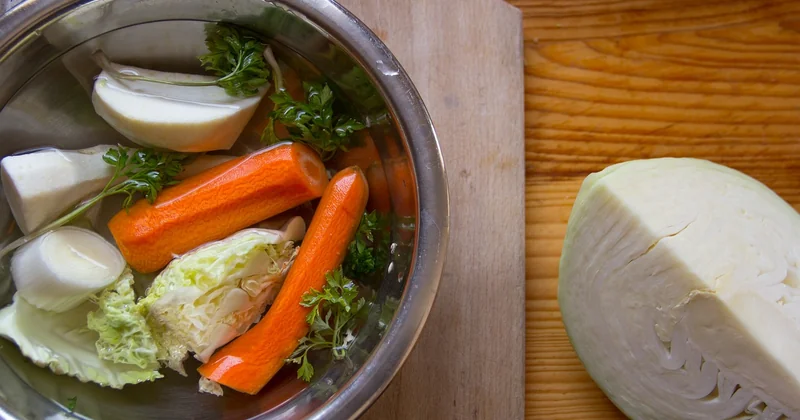
Sunday: roast a tray of chicken thighs, cook a pot of rice or lentils, wash and chop two vegetables, make one sauce (a yogurt-garlic-lemon mix lasts the week). That's roughly 45 minutes of work. During the week it means every dinner is a 15-minute assembly rather than a 45-minute cook from scratch.
Measured honestly: my average weeknight cooking time went from about 40 minutes to somewhere around 18. That's over an hour and a half back per week, and I didn't have to eat the same meal four days running.
The method, condensed
- Prep components on Sunday, not finished meals
- Keep six to eight trusted recipes, not forty
- Cook double on Mondays to cover Tuesdays
- Shop once, with a list built from the six
How easy weeknight dinner recipes can stay healthy
Healthy eating on a schedule is less about calorie counting and more about a simple ratio. I aim for: one protein, one vegetable, one starch, in roughly equal visual volume on the plate. That's it. No app, no macros, no tracking.

The meals above already fit, if you don't sabotage them:
- Protein: chicken thighs, eggs, salmon, lentils, sausage
- Vegetable: double the amount the recipe suggests — genuinely double
- Starch: rice, pasta, potatoes, all in moderation
The most common mistake I see among professionals cooking at home isn't too much fat or too many carbs. It's skipping the vegetable entirely because it feels like extra work at the wrong moment. Prep it on Sunday and it stops being a decision.
Quick dinner ideas for tonight when you have nothing planned
No prep, no plan, no shopping. Sound familiar? These are the emergency options that don't require a trip to the store.
| Meal | Approx. time | What you probably have | Cost per portion |
|---|---|---|---|
| Egg fried rice | 10 min | Rice, eggs, soy sauce, frozen peas | $1.50–2.50 |
| One-pot pasta | 20 min | Pasta, canned tomatoes, garlic | $2–3 |
| Chickpea shakshuka | 20 min | Canned chickpeas, tomatoes, eggs | $2.50–4 |
| Bean and cheese quesadillas | 10 min | Tortillas, canned beans, cheese | $2–3 |
| Takeout (for comparison) | 40 min | Your phone | $15–25 |
The gap between a $2.50 home-cooked portion and a $20 delivered one is real, though I've never trusted anyone who claims you'll get rich from cooking. The benefit I actually feel is different: the evening ends with a modestly satisfying meal and no delivery notification at 8:45 PM.
Are these recipes kid-friendly?
Most of them are, with two changes. Fried rice and quesadillas are almost universally accepted. Shakshuka and the lentil skillet depend entirely on the child — I'd serve rice and eggs separately the first time rather than mixing everything into a stew. The sheet-pan chicken works because children tend to eat components rather than combined dishes.
Can I cook these for two people?
Yes, and the recipes above are built for two with deliberate leftovers. The main adjustment is buying smaller quantities of fresh vegetables — a whole head of broccoli for two people means broccoli on Thursday and, if you're not careful, broccoli that goes to the bin on Sunday. Canned and frozen vegetables scale down without waste.
The habit that matters more than any recipe
I've given you a handful of dishes, a prep routine, and a table. None of it is the point.
The point is that weeknight cooking isn't a talent. It's a small system — six recipes, one shopping trip, a Sunday hour — that quietly removes the daily decision about what to eat. Build the system once and it runs on its own. Skip it and you'll be back at the fridge at 6:40 PM, phone in hand, doing the arithmetic on a $28 dinner you didn't really want.
The recipes will change. The system won't. And after a few weeks, you'll notice something stranger than the savings: it stops feeling like a chore and starts feeling like the part of the day the rest of it was leading toward.


