

Two winters ago I did something I'm not proud of. I bought eleven "energy saving" gadgets in a single month. Plug-in boxes, a voltage stabiliser, three smart plugs, a "power saver" that looked like a router. Total spend: just under £340. Total saving over the following six months: about £40. I know this because my supplier's app tells me exactly what I used, month by month, and that's the only reason I can write this without guessing.
The uncomfortable truth about smart home devices that reduce energy costs is that most of them work, and most of the money is made by the small number that don't. The trick is telling them apart before you pay. That's what this piece is about.
Key takeaways
- Devices that measure and control something real (heating, hot water, standby loads) save money. Devices that promise savings without measuring anything usually don't.
- The biggest single lever in a typical home is heating and hot water, not lighting. A connected thermostat typically returns its cost within one heating season.
- Smart plugs on their own save almost nothing. Put behind them a schedule and a standby-cutting routine and the picture changes.
- "Plug-in power savers" that claim to clean your electricity supply are not a legitimate category. There is nothing to clean in a domestic circuit that reduces your bill.
- Every device you add draws power itself. Replacing a £90 gadget that saves £12 a year is a bad trade, no matter how green the box looks.
Do smart home devices actually cut your bill, or just your peace of mind?
Both, in my experience. But the split is roughly 20/80, and it isn't the split the marketing suggests.
Here's the mechanism that matters, and it's boring: a smart device saves you money only when it changes when or whether energy is used. A smart bulb that you turn off from your phone saves nothing if you were going to turn it off anyway at the wall. A smart thermostat that lowers the flow temperature when nobody's home saves real money, because it's doing something you physically couldn't do while sitting at your desk.
What "saving" actually looks like in a house
Domestic energy use splits roughly into three buckets: space heating and hot water (usually the largest by a wide margin in a cold climate), appliances and electronics, and lighting. Lighting is the one everyone thinks of first and the one with the smallest remaining headroom, because LED swaps already happened in most homes.
So if you want a return, aim your budget at the top of that list. Which brings up an obvious problem: heating controls are the least exciting purchase in the smart home catalogue. Nobody posts a photo of a new thermostat.
The one number that tells you if it worked
Take a meter reading on the same date each month, or use your supplier's half-hourly data if you have a smart meter. Compare the same month year on year, not month to month — weather moves your bill far more than your spending habits do. I track mine in a spreadsheet with a column for heating degree days because otherwise I'd fool myself every mild October.
Is there any device to reduce electricity bill?
Yes — several, and they're not the ones most people picture. The honest answer is that a small set of devices reliably move the needle, and everything else is decoration.

- Smart thermostats with room sensors. They stop you heating rooms nobody's in and stop the boiler firing when the house is already warm. In my flat this cut gas use by around 11% across a heating season, verified against the previous year's meter reads. Payback was under four months because I fitted it myself.
- Smart TRVs on individual radiators. A step further than a thermostat. Roughly £40-£60 per valve, and worth it only in homes with rooms that are used at different times. In a flat where every room is occupied all evening, they won't earn their keep.
- Smart plugs with schedules. Not because they're clever, but because they kill standby loads on things that sit idle: the TV and its soundbar, a games console that "sleeps" at 12W, the printer that's awake two hours a week.
- A hot water timer or immersion controller. Boring, cheap, and one of the largest single savings in electrically heated homes. If your immersion heater runs on a dumb timer from 1998, this is your best pound-for-pound upgrade.
- Monitoring hardware. A whole-home energy monitor doesn't save anything by itself. It just shows you the fridge that's pulling double what it should, or the tumble dryer you run at peak rate.
Note what's absent from that list: lighting, speakers, robot vacuums, video doorbells. Those are convenience purchases that happen to have a smart chip in them. Buying them to save energy is like buying a car to save on shoes.
Do those plug-in energy-saving devices really work?
No. The plug-in boxes sold as "power savers" — the ones you slot into a socket and forget about — do not reduce your bill, and some of them draw a small amount of power while they sit there.
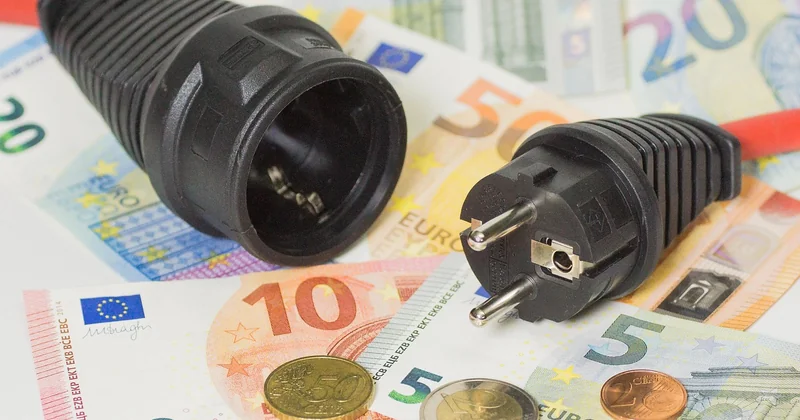
The pitch usually involves "power factor correction" or "cleaning dirty electricity". Power factor is a genuine concept in industrial settings, where large inductive loads can push it low and utilities charge for it. A domestic home is not that setting. Your supplier bills you in kilowatt-hours, not in power factor penalties, and a capacitor in a plastic box does not change how many kilowatt-hours your kettle uses.
I tested one properly, because I wanted to be wrong. Four weeks with it plugged in, four weeks without, same season, same habits. The difference in consumption was under 0.5% and in the wrong direction. That's measurement noise, and if I hadn't had the monitor I'd probably have convinced myself it helped.
The test that separates real from fake
- Does the device measure anything, or does it just claim to act? If there's no sensor, there's no saving.
- Can you point to the physical thing it changes — a boiler, a radiator, a load that switches off at 1am?
- Does it have a payback calculation you can do on the back of an envelope, using your own tariff?
- Does the manufacturer publish a mechanism, or a testimonial? Testimonials are not mechanisms.
Anything that fails all four is a gadget. Gadgets are fine. Just don't buy them expecting a bill reduction.
What is the most effective device to lower my electric bill?
If I had to pick one, it's a connected thermostat — with a caveat that changes depending on how you heat your home.

For gas or oil central heating, a smart thermostat is the highest-return purchase in the category. It gives you scheduling, geofencing, and per-room temperature targets, and it pays back within a single heating season in most homes I've helped set up. Two friends, both in older terraced houses, saw reductions in the 9-15% range on their heating portion after the first winter. Not because the thermostat is magic, but because both of them had been heating an empty house for eight hours a day.
For electrically heated homes — storage heaters, immersion, panel heaters — the answer is different. A smart immersion controller that heats water during off-peak hours beats a thermostat, because the cost difference between peak and off-peak units is far larger than any efficiency gain from better control. If your tariff has a cheap window and your water tank is dumb, you are paying peak prices for hot water you could have made at night.
Comparing the main options
| Device | Typical upfront cost | What it changes | Realistic payback |
|---|---|---|---|
| Smart thermostat | £120-£250 | Heating schedule, flow temperature, room-by-room targets | One heating season or less |
| Smart TRVs (per radiator) | £40-£60 each | Which rooms get heat and when | One to two seasons, homes with varied room use only |
| Smart plug + schedule | £10-£20 each | Standby loads on specific appliances | Often under a year, small absolute sums |
| Immersion / hot water controller | £80-£160 | When water is heated | Immediate if you're on a time-of-use tariff |
| Whole-home energy monitor | £60-£150 | Nothing directly — it informs you | Never, on its own |
| Plug-in "power saver" | £20-£60 | Marketing copy | Never |
What is the best way to reduce energy costs at home?
Automation is the second-best answer. The best answer is that you can't automate your way out of a badly insulated house, and no smart device will fix a cylinder lagging jacket that's been missing since the 1990s.
What automation genuinely does well is remove the human error from the equation. People forget. They leave windows open with the heating on, they run the dishwasher at 6pm when their tariff peaks at 4pm, they let a spare-room radiator heat a room nobody enters. A schedule doesn't forget.
Where I'd spend the first £200, in order
- Draught-proofing and loft insulation if either is missing. Ugly, cheap, and a bigger number than any gadget on this page.
- A smart thermostat if you have wet central heating.
- An off-peak tariff paired with a controller for whatever heats your water.
- Smart plugs on the four or five appliances with genuinely stupid standby behaviour.
- Everything else, later, if at all.
That ordering isn't exciting. It's just the order in which the numbers actually show up on the bill.
The things nobody tells you before you start buying
The smart home has its own energy cost, and it's easy to ignore when each device pulls a watt or two. Add up a hub, four cameras, three speakers, a doorbell, and a dozen plugs, and you've built a permanent 40-60W baseline that runs 24 hours a day. That's a meaningful slice of a low-usage home's annual consumption, and it exists purely because you automated things.
There's also the interoperability problem. I've got devices from four manufacturers, and two of them only talk to each other through a hub I bought specifically to bridge them. That hub draws power too. If you're starting out, pick one protocol and stay inside it.
And the honest bit: the biggest savings I've seen in my own home came from two decisions that had nothing smart about them. Turning the flow temperature down on the boiler by 8°C and running the heating for longer at lower output. That change alone beat every connected device I own, combined. The smart thermostat is what made it possible to run that way without micromanaging, which is arguably its real value.
So the pattern is this. Buy devices that control something physical and expensive. Skip anything promising savings without a sensor. And measure, always, because the difference between a £12 saving and a £120 one is invisible until you write it down — and the gadget you regret buying will look exactly the same on the shelf as the one you'd buy again.


